


2025.07.06
What’s the Difference? The Difference Between Authentic Kintsugi and Simplified Kintsugi
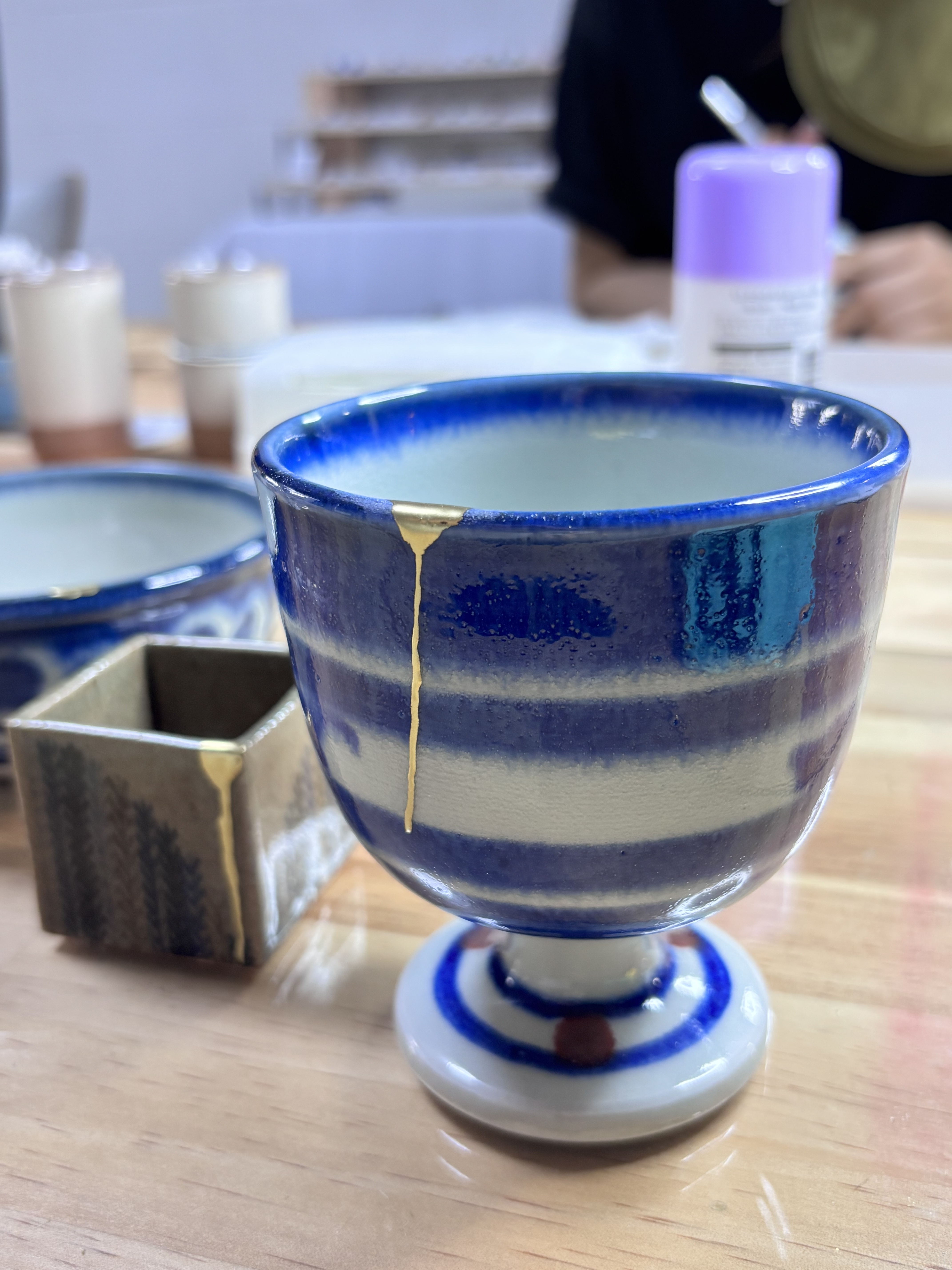
“Kintsugi” is the art of beautifully restoring broken pottery.
While there are now more and more kits available for enjoying this craft at home,
a question we’re often asked is, “What’s the difference between authentic kintsugi and simplified kintsugi?”
In this post, we’ll explain that difference in an easy-to-understand way.
🌿 What is Traditional Urushi Kintsugi?
Traditional Urushi Kintsugi is the classic kintsugi technique.
It uses “urushi,” a natural material native to Japan,
and is repaired by artisans who work on each piece by hand.
✅ Features
: Materials include natural lacquer and gold powder (or brass powder, depending on the desired finish)
. After restoration, the piece is safe to use
as tableware. Completion takes several weeks to several months (due to the drying time required for the lacquer and the numerous repetitive steps involved 💦)
. 🌟 Pros
: Offers the highest level of both beauty and durability; holds value
as a traditional craft. 🌟
⚠️ Cons: Risk of
lacquer allergy (caution advised for those with sensitive skin)
; the process is difficult and requires practice. 😫
✨ What is Simplified Kintsugi?
Simplified Kintsugi is a restoration method adapted for modern use.
It uses adhesives or synthetic resins instead of lacquer.
✅ Features
: Materials include epoxy adhesive or resin mixed with brass powder.
Work time is about
1–2 hours. Easy for beginners to handle
🌟 Pros: Completed
in a short time 😲 No risk of
lacquer rash.
Affordable and comes with comprehensive kits
. ⚠️ Cons:
Durability is inferior to traditional lacquer. Not recommended for use
as tableware (mostly suitable for display) 💡
Here’s an important point! The materials used in
simplified kintsugi vary depending on the kit or workshop.
Many adhesives—especially those intended for crafts—do not meet food safety standards.
The adhesive used in kululkulu’s simplified kintsugi meets the Food Sanitation Law, so even after repair, it’s safe to use the dishes to serve
food or hold beverages.
If you’re going to the trouble of repairing a cherished piece of tableware, you’ll want it to take its place once again at your everyday dining table, right?
With kululkulu’s simplified kintsugi, we use adhesives that are safe for food contact, so you can continue to enjoy your plates and cups every day after the repair.
Broken tableware isn’t just “fixed”—
it’s reborn with a new, one-of-a-kind look. That’s the true charm of kintsugi ✨
Why not try breathing new life into your tableware with kintsugi yourself?
≫ Open PDF
While there are now more and more kits available for enjoying this craft at home,
a question we’re often asked is, “What’s the difference between authentic kintsugi and simplified kintsugi?”
In this post, we’ll explain that difference in an easy-to-understand way.
🌿 What is Traditional Urushi Kintsugi?
Traditional Urushi Kintsugi is the classic kintsugi technique.
It uses “urushi,” a natural material native to Japan,
and is repaired by artisans who work on each piece by hand.
✅ Features
: Materials include natural lacquer and gold powder (or brass powder, depending on the desired finish)
. After restoration, the piece is safe to use
as tableware. Completion takes several weeks to several months (due to the drying time required for the lacquer and the numerous repetitive steps involved 💦)
. 🌟 Pros
: Offers the highest level of both beauty and durability; holds value
as a traditional craft. 🌟
⚠️ Cons: Risk of
lacquer allergy (caution advised for those with sensitive skin)
; the process is difficult and requires practice. 😫
✨ What is Simplified Kintsugi?
Simplified Kintsugi is a restoration method adapted for modern use.
It uses adhesives or synthetic resins instead of lacquer.
✅ Features
: Materials include epoxy adhesive or resin mixed with brass powder.
Work time is about
1–2 hours. Easy for beginners to handle
🌟 Pros: Completed
in a short time 😲 No risk of
lacquer rash.
Affordable and comes with comprehensive kits
. ⚠️ Cons:
Durability is inferior to traditional lacquer. Not recommended for use
as tableware (mostly suitable for display) 💡
Here’s an important point! The materials used in
simplified kintsugi vary depending on the kit or workshop.
Many adhesives—especially those intended for crafts—do not meet food safety standards.
The adhesive used in kululkulu’s simplified kintsugi meets the Food Sanitation Law, so even after repair, it’s safe to use the dishes to serve
food or hold beverages.
If you’re going to the trouble of repairing a cherished piece of tableware, you’ll want it to take its place once again at your everyday dining table, right?
With kululkulu’s simplified kintsugi, we use adhesives that are safe for food contact, so you can continue to enjoy your plates and cups every day after the repair.
Broken tableware isn’t just “fixed”—
it’s reborn with a new, one-of-a-kind look. That’s the true charm of kintsugi ✨
Why not try breathing new life into your tableware with kintsugi yourself?

